
Cold email isn’t dead, lazy execution is
Welcome to B2B Growth Secrets, where every week, we listen to dozens of B2B Growth podcasts and extract the top actionable ideas. (For more context on these ideas, give the podcasts a listen)
Learn AI from builders in B2B. We're launching AI Skills workshops to help you understand trends, build custom tools, and automate workflows (taught by the CTOs / Heads of AI building AI tools in your industry, not trainers).
Reply “Skills” to save your spot as a Founding Member (the first 100 get 50% lifetime discount).
In this issue:
Cold email is NOT dead… but lazy cold email IS!
The right way to use AI in sales: find your edge in crowded markets
Don’t ignore brand investment: it creates the awareness that makes your demand capture effective
1. Cold email is NOT dead… but lazy cold email IS!
Club Guestroom podcast: How Cold Email Really Works in 2026 w/ Enzo Carasso (1/14/26)
TLDR:
Cold email success in 2026 requires overwhelming volume at low send rates (5-10 emails per inbox per day) combined with irresistible offers
Converting cold leads requires a multi-touch "motion" that includes email, LinkedIn profile visits, connection requests, and phone calls in sequence
The best agencies solve the entire funnel from lead generation to booked meetings – not just positive replies
Why most cold email fails (and what actually works)
Enzo Carasso, founder of C17 Lab (“we engineer systems that drive revenue”), became the number one worldwide affiliate for Alex Hormozi's $100M Money Models launch using cold email. His advice? Understand that cold outbound sits at the hardest end of the acquisition spectrum.
Unlike inbound (where prospects come to you) or referrals (where trust is pre-built), cold email requires convincing strangers to care about you. That means your offer needs to be 10x better than anything else in your prospect's inbox.
The infrastructure for cold emails
Enzo runs over 1,000 domains and 12,000+ inboxes, but sends only 5-10 emails per inbox per day. His logic is simple: nobody sends 20 real emails daily, so why would your automation? Lower send volumes per inbox, spread across massive infrastructure, keeps deliverability high.
For the Hormozi campaign, he spent $28,000 on infrastructure alone and sent nearly 100,000 emails daily. The targeting was surgical: he scraped every podcast host's followers that Hormozi had appeared on over five years. Why? Because those listeners already trusted Hormozi through the podcasts they followed.
The conversion problem that agencies often ignore
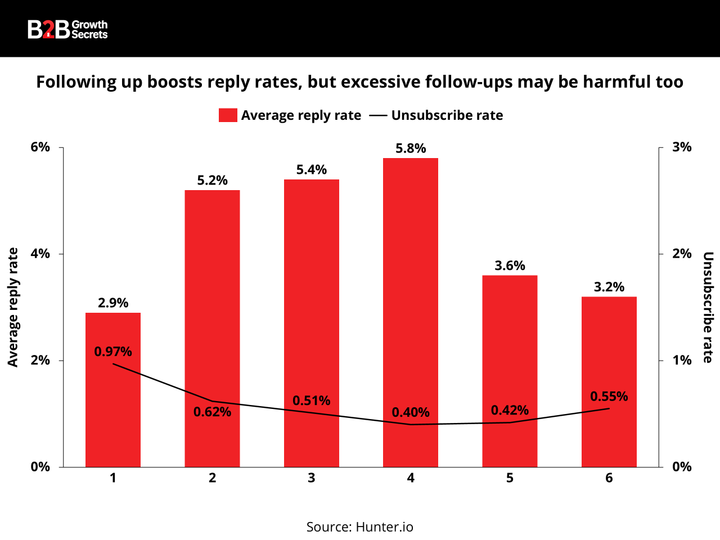
Generating a "positive reply" and booking a meeting are two completely different muscles. Enzo once had a client receive 180 leads in a month but only book two meetings. The solution? Own the entire motion.
His agency now handles email, LinkedIn outreach, cold calling, and follow-up sequences. The goal is to make it impossible for clients to blame the leads. If someone shows up on their calendar and they can't close – that's a sales problem, not a lead problem.
Designing offers for cold traffic
The key insight: provide so much value upfront that prospects can’t say no. Enzo offers to launch campaigns and book meetings for free before clients pay anything. This eliminates the biggest objection in cold outreach: "Will I actually get results?"
For each target, create an orchestrated "motion" that feels personal: email on Monday, LinkedIn profile visit Tuesday, connection request Wednesday, second email Wednesday afternoon, phone call Thursday, LinkedIn message Friday. At scale, this creates the feeling of one-to-one outreach.
The bottom line
Cold email isn't dead – lazy cold email is. Success requires massive infrastructure operated conservatively, offers that eliminate risk for prospects, and systems that convert interest into actual meetings. If you're only delivering positive replies, you're solving half the problem.
2. The right way to use AI in sales: find your edge in crowded markets
Webinar: $2M → $150M ARR: Real Lessons from SaaS Hypergrowth w/ Maruthi Medisetty, co-founder / FDE @ Nevara (sales admin platform) (1/12/26)
TLDR:
In crowded markets, your edge comes from finding the 2-5% advantage over competitors through code and data
AI should function as "ambient intelligence" that helps sellers be more human, not replace them
Do fewer things perfectly: users don't want promises of everything, they want specific problems solved
Maruthi Medisetty lived through the kind of growth most founders only dream about. At Remote.com, he watched revenue climb from $2-3 million to $150 million ARR in just two years and three months. Then he did it again at Rippling, helping a single product line cross $100 million. His biggest takeaway? Code is your leverage.
Finding your edge in crowded markets
When people told Maruthi that HR software was a "crowded market," he heard something different. Rippling is the 700th HRIS system on G2 Crowd. There are probably 2,000 payroll providers in the US alone. Some businesses only handle Colorado state payroll for companies with UK offices… and they're doing $10-15 million in revenue.
The insight: crowded market complaints usually mean someone doesn't understand the nuances. Your job is to find your 2-5% edge through data and internal tooling. At Remote, Maruthi built spreadsheet-based tools with color-coded cells to help sellers identify upsell opportunities – primitive by today's standards, but it gave his team an advantage competitors didn't have.
Why AI should make sellers more human
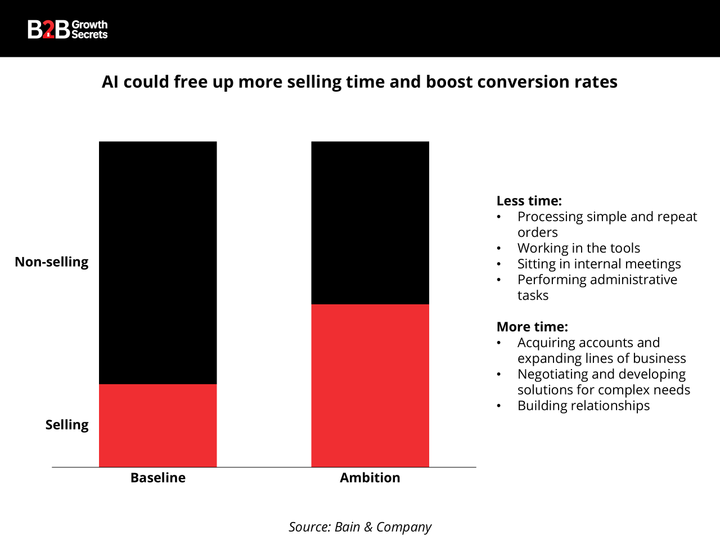
As buyers encounter more bots and automation, they're craving more human connection, not less. The role of AI isn't to replace your sales team; it's to handle the administrative burden so sellers can be fully present with customers.
Maruthi calls this "ambient intelligence": AI that sits in the background understanding context, doing prep work, following up on tasks, while the seller focuses on building trust and exercising judgment. The goal is turning every salesperson into a forward-deployed engineer – someone who understands both the technical product and how to sell it consultatively.
The power of doing fewer things perfectly
After conducting over 300 customer interviews for his new company Nevara, Maruthi learned something counterintuitive.
Customers weren't asking for more features. They were saying: everyone promises the same thing, and nothing works in production. Just solve this one specific problem.
His response was to focus on two or three things and perfect them, earning customer trust before expanding. In the zero-to-one stage, your product and go-to-market are essentially one thing. User love – people loving your product so much they tell their friends – is both your retention strategy and your marketing.
The bottom line
The companies that win in crowded markets don't do it by being everything to everyone. They find specific problems, solve them better than anyone else, and use data and tooling to give their teams a small but meaningful edge. That 2% advantage compounds into market leadership.
3. Don’t ignore brand investment: it creates the awareness that makes your demand capture effective
B2B Marketing Futures podcast: Demand Creation versus Demand Capture (1/13/26)
TLDR:
Demand creation builds long-term brand awareness, while demand capture converts existing interest – both must work together, not in silos
Community and organic content investments pay compounding returns that accelerate capture later
Physical events convert faster than virtual webinars because prospects can ask questions and get immediate depth
One of the most persistent debates in B2B marketing is how to balance demand creation (building awareness among people who don't know they need you yet) against demand capture (converting people already searching for solutions).
Why the buying journey killed your funnel
Buyers don't move through the funnel in a straight line anymore. Someone might attend a free event (demand creation), then go dark for six months, then suddenly request a demo after a LinkedIn post resonates (demand capture). A single sales enablement initiative can create demand while also capturing it.
The practical implication: build campaigns that seamlessly integrate both. For example, ServiceNow uses in-person global events as the bridge: free, low-stakes environments that create awareness, followed by sales outreach to convert attendees and even non-attendees into qualified leads.
The case for brand investment (and how to make it)
Making the case for long-term brand investment is notoriously difficult when leadership wants attributed pipeline. Here’s how to reframe brand investment: position brand as a force multiplier for performance. Strong brand awareness lowers your cost per lead, increases conversion rates, and improves sales velocity.
At Fortanix, early investment in organic content and SEO created compounding returns. Their website traffic grew from 20,000 to 80,000 monthly visits in six months through FAQ content optimization. More importantly, organic leads convert faster than paid leads – often in weeks rather than the 6+ months typical of event or paid acquisition.
The logic is simple: organic pulls people who already know what they're looking for. They arrive educated and ready to buy. Paid and events require you to nurture cold leads through multiple touches.
Community as a demand creation engine
dbt Labs built a 100,000-person Slack community before they had any go-to-market campaigns. That early investment in podcasts, meetups, and Reddit forums created demand that was waiting to be captured when they launched paid products.
The key lesson: community teams shouldn't be measured on pipeline directly. They should focus on engagement and education. When someone in that community becomes ready to buy, the brand awareness work has already been done.
The bottom line
You can't capture demand that doesn't exist. Brand investment creates the awareness that makes your demand capture tactics more efficient. The companies winning this balance treat both as interconnected parts of a unified revenue strategy, not competing budget line items.
Disclaimer
B2B Growth Secrets summarizes and comments on publicly available podcasts for educational and informational purposes only. It is not legal, financial, or investment advice; please consult qualified professionals before acting. We attribute brands and podcast titles only to identify the source; such nominative use is consistent with trademark fair-use principles. Limited quotations and references are used for commentary and news reporting under U.S. fair-use doctrine.
